Indicating Bike Helmet
LED turn signals for improved cyclist safety
Engineering / Electronics / Safety
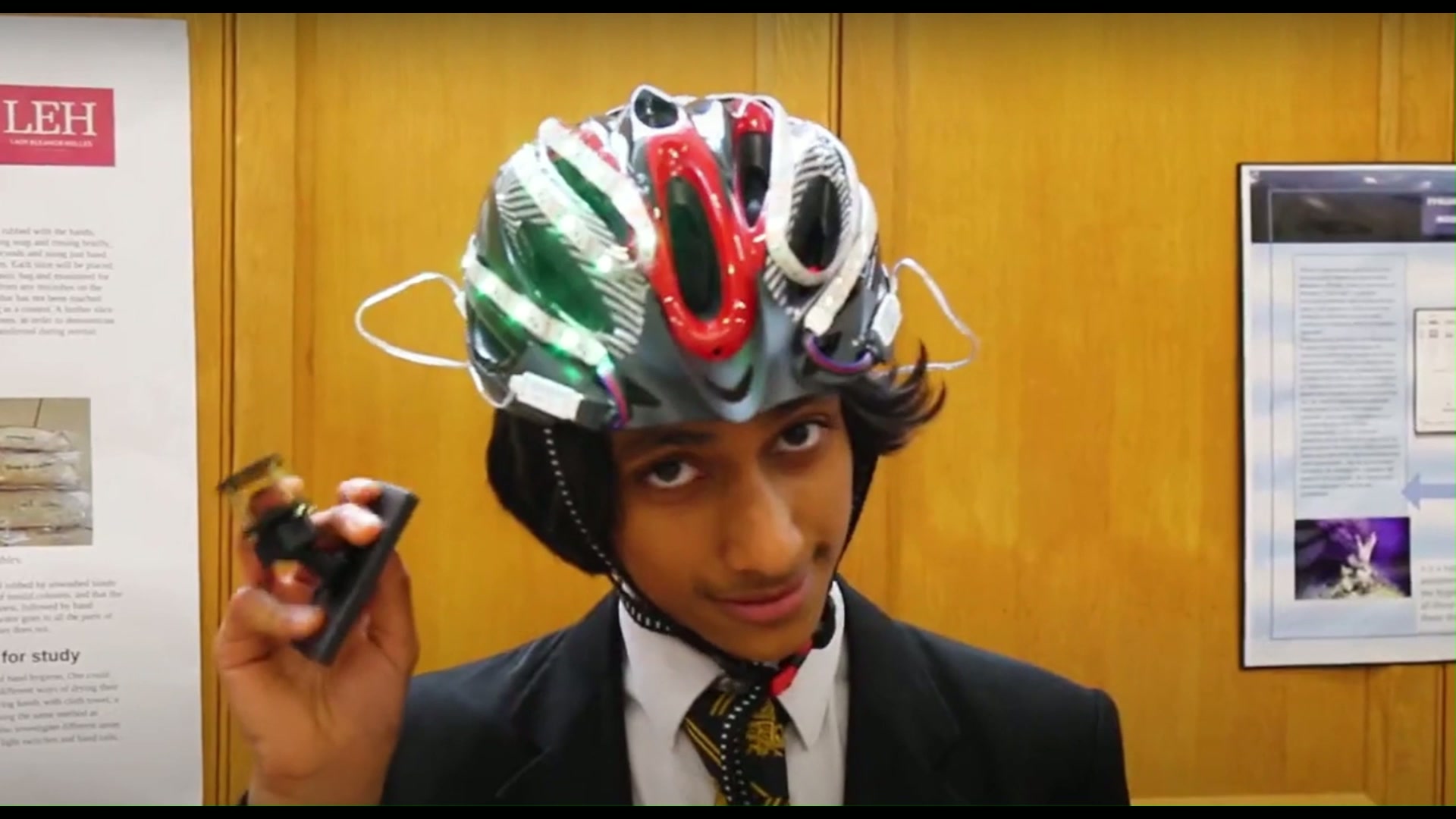
The story
This project started on a dark ride home. I signalled with my arm, but it felt like the driver barely saw me. I wanted to make a cyclist signal as obvious as a car indicator, so I built LED turn signals into a helmet and controlled them from the handlebars.
Why I built it
The challenge was reliability. If a safety device works only sometimes, it can be worse than not having it. My first version exposed exactly that problem when rain and weak solder joints made the electronics unreliable.
What I built
I rebuilt the wiring, improved the waterproofing, adjusted the LED placement, and kept testing whether the signal was visible from different angles. The final prototype used handlebar controls to trigger left, right, and hazard-style LED patterns on the helmet.
What I did
- Full concept-to-prototype design and build
- Electronics circuit design and soldering
- Physical integration into helmet form factor
- Iterated the waterproofing, LED placement, and switch usability after outdoor tests
- Competition presentation and documentation
How I built it
Build flow
Handlebar input -> microcontroller -> directional LED activation -> visual output on helmet.
How it works
Handlebar-mounted buttons send signals to a microcontroller that activates left, right, or hazard LED patterns embedded in the helmet shell. The prototype routed LEDs around the rear and sides of the helmet so drivers could read the signal even from oblique angles.
Hardware
Software
What was hard
- Integrating electronics without compromising helmet safety or comfort
- Weatherproofing connections after rain exposed weak solder joints and unprotected electronics
- Ensuring signal visibility from multiple angles without glare
- Making the controls usable while riding, including with gloves
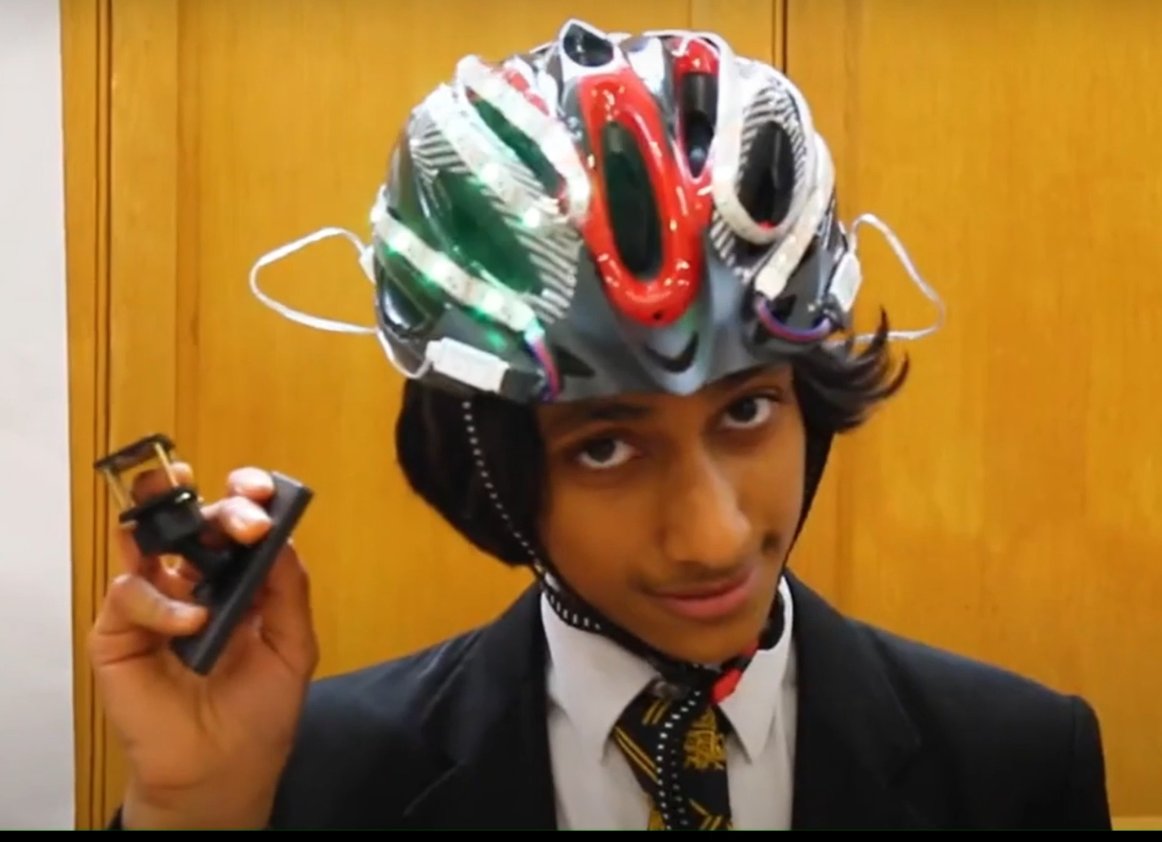
Build reference
Prototype wiring and LED layout showing how the signal strips were physically integrated into the helmet.
Click to inspect
Demos and build notes
Product demos
Photos and notes
Project photos
Results & impact
- ✓ 1st Prize - Hampton STEM Competition
- ✓ Working prototype with reliable LED indication
- ✓ Refined from a fragile first version into a more weather-conscious and rideable prototype
- ✓ Demonstrated practical safety engineering approach
What I'd tell past me
- A safety device that fails quietly in the rain is worse than not having one at all
- The simplest control - one button per direction - was more reliable than anything cleverer I tried
If I keep going
- Try accelerometer-based auto turn detection so I don't need the handlebar button at all