Climbing Magnets Investigation
Experimental analysis of magnetic force in climbing systems
Physics / Research
The story
This was my entry for the Swiss Young Physicists' Tournament: could magnets hold enough force, consistently enough, to be trusted in a climbing-related attachment? It's the kind of question that sounds simple until you actually try to measure it.
Why I built it
Textbook magnetism assumes ideal conditions. Real magnets don't - manufacturing tolerances, surface contact, and orientation all change the force by more than I expected, and none of that shows up in the standard formulas.
What I built
I ran controlled trials across distance, angle, and magnet type, logged the attractive force each time, and compared what I measured against what the physics predicted - then had to defend the gap between the two in front of a jury.
What I did
- Designed the experiment and measurement protocol
- Ran the trials across all the variable conditions
- Analysed the data and built the force model
- Presented and defended the project at the tournament
How I built it
Build flow
Hypothesis -> controlled trials -> data collection -> model -> jury defence.
How it works
Magnets were tested at set distances and orientations while I measured the attractive force, then plotted the results against the theoretical model to see where reality and prediction diverged.
Hardware
Software
What was hard
- Keeping the measurement method identical across dozens of trials
- Real magnetic fields behaving less cleanly than the theory suggested
- Explaining the physics clearly under jury questioning
Build reference
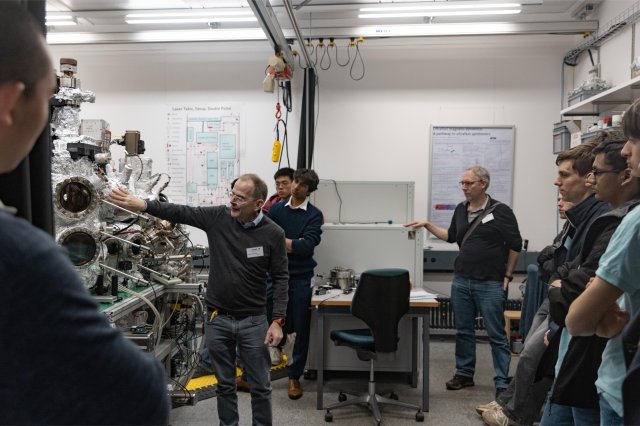
Tournament research environment and lab context for the experimental investigation.
Click to inspect
Demos and build notes
Photos and notes
Project photos
Results & impact
- ✓ Top 10 national finish at the Swiss Young Physicists' Tournament
- ✓ A dataset that actually showed where the textbook model breaks down
What I'd tell past me
- A clean-looking result is worthless if the method behind it was inconsistent
- Real-world materials rarely behave like the idealised version in the textbook
If I keep going
- Test how the force holds up under dynamic, not just static, load