Cardboard Gaming Steering Wheel
Low-cost physical controller for racing simulation
Early Engineering / Prototyping
The story
This was one of my earliest proper builds. During COVID, my sister could not continue driving lessons, so I tried to make practice feel more realistic at home. I used cardboard, string, hot glue, and a game controller to build a steering wheel, pedals, and shifter for a racing simulator. It looked rough, but it worked.
Why I built it
The challenge was using whatever I had at home. I did not have proper sensors or a manufactured wheel, so I had to make the physical movement push the existing controller inputs in a repeatable way.
What I built
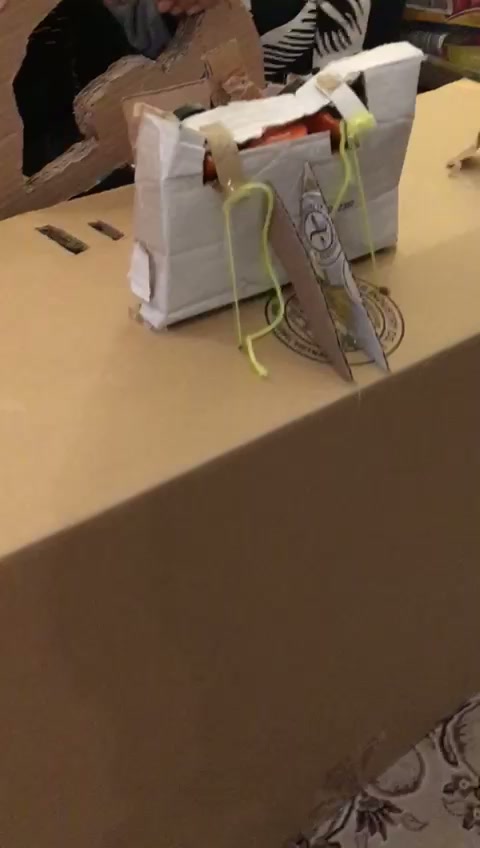
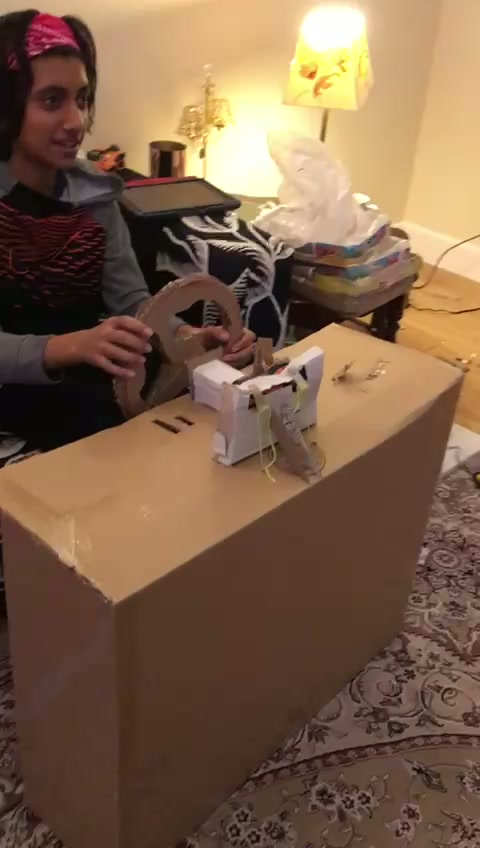
The wheel turned the joystick through a simple axle mechanism, while the pedals used string linkages to pull the controller triggers for acceleration and braking. It was not elegant, but it taught me that a prototype can be useful long before it looks polished.
What I did
- Designed and built the physical controller structure
- Built the wheel, pedals, and shifter from scrap materials and an Xbox-style controller
- Mapped physical motion to game controls through mechanical linkages
- Tested and refined responsiveness for gameplay
How I built it
Build flow
Physical input -> cardboard linkage -> controller stick/triggers -> racing sim.
How it works
Steering rotation and pedal movement are transferred through the cardboard frame into the game controller controls, letting the simulator read the build like an ordinary controller while the user interacts with a more realistic physical setup.
Hardware
Software
What was hard
- Achieving stable structural integrity with cardboard materials
- Calibrating the mechanical travel so the controller inputs responded smoothly
- Minimising input latency for playable experience
Build reference
Physical input mechanism showing how steering and pedal actions were translated through the controller setup.
Click to inspect
Demos and build notes
Product demos
Photos and notes
Project photos
Results & impact
- ✓ Functional prototype playable in racing simulation
- ✓ First prize in the school Extended Learning Project competition
- ✓ Early demonstration of sensor integration and product thinking
- ✓ Foundation for later electronics and robotics projects
What I'd tell past me
- Cardboard and string can solve a real problem - it doesn't have to look good to work
- Getting the calibration right mattered more than how the thing looked
If I keep going
- Rebuild it properly one day with 3D-printed parts, just to see how much better it'd feel